Showing posts with label Fat Loss. Show all posts

Monday, October 1, 2012

Calorie Control the Simple Way


Seriously, calorie counting works wonders, but isn't there a simpler way? The way I see it there are two options, eat whatever TYPE of food you want and just count every last calorie because the food you love is so calorie dense, or eat REAL food and just control portions with a few easy habits and methods. By the way, chances are the food you love that is energy dense is NOT nutrient dense so you'll only be able to eat tiny amounts and you won't even come close to the nutrition your body needs to have the energy you want and that tight, fit feeling. Personally, I'll take the real food and keep the other food as treats. That's right, you don't have to give up your favorite dishes! Just keep them under control. Check it out: Calorie Control Guide for Men and Women

Thursday, September 20, 2012

Interval Training Explained - Part 2


In the last installment of "Interval Training Explained" we went over the "what" and "why" of interval training. This installment will focus on the "how?"


So what do you do?


First, interval training is stressful for the body (again, a GOOD thing in the right amount) so it should only be done 1 to 3 times per week for most people. The rest of your cardio, if you so choose to do it, should be steady pace also known as "steady state." This would be the jogging, any cardio exercise at a steady pace.


Mode


Before getting into too much, you need to choose an exercise "mode." A mode is simply that actual exercise movement you perform. Some examples are running, biking, push ups, planks, swimming, you name it. 

The first consideration in selecting your mode is simplicity. You don't want to have to think too much about what you are doing. You'll have plenty to focus on with the intensity of interval training. Good examples are sprinting (NOT on a treadmill - DANGEROUS!!!!), swimming, biking, and various bodyweight exercises. A caution when swimming, do intervals in shallow water because you will get very tired and you don't want to have to tread water.


Sled pushing, don't be intimidated

The next consideration is self-limitation. You want exercises that don't involve too much form break down. When you do interval training, your muscles get tired, when your muscles get tired your form can easily breakdown increasing the risk of injury. So you wouldn't select an olympic snatch, one of the most technical lifts in weightlifting. A better example would be up hill walking or running/sprinting, sled pushing, battling ropes, any "self-limiting" exercise. 


The Olympic Weightlifting Snatch


Work-to-Rest Ratio


Now that you have your mode selected it's time to plan the rest of the workout. With interval training there is a work-to-rest ratio. The work interval could be anywhere from 10 seconds to 3 or 4 minutes. Just keep in mind the shorter the burst, the harder the effort must be. After the burst you ease back to a steady pace until you catch your breath and are ready for another burst.

There are different levels of interval training. If you are just starting out, you can use a work:rest ratio of about 1:3 or 1:4. This means if your burst is 1 minute then you go back to a steady pace for 3 or 4 minutes. By the end of the burst you should be winded to the point that you can only speak a few words  before you have to breath again. By the end of the rest period you should feel very recovered and ready for another burst.

For the more advanced, the work:rest ratio can be more around 1:2, 1:1, or even Tabata 20 seconds on and 10 seconds off for the very advanced.


Helpful Tools


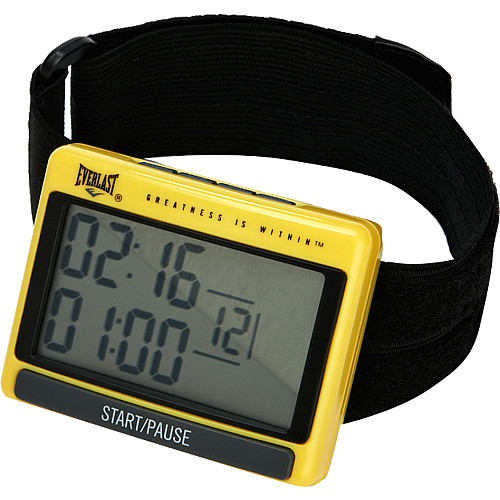
Interval timers are a great tool to help. You can set the work interval time and the rest interval time. Many interval timers also allow you to set the number of rounds you want to perform. Once you get everything set, hit start and start working, when it beeps, rest, when it beeps again, start going again. Easy peasy.


Summary


As you can see interval training is a kick in the butt! However, it's great when you're short on time or want a little bit faster results. Just select your mode, choose your time intervals, set an interval timer and go! 

*Make sure you warm up properly and listen to your body! If it says "stop" then "stop!"


If you like Fitness by Chris Finley please subscribe and spread the word! God bless! :) 


Wednesday, September 12, 2012

Interval Training Explained - Part 1


Wouldn't it be nice if there were a way of exercising that took less time while getting you the results you want? Well, that's interval training! 

Picture a southwestern guy about 6 foot 1 inch, with an average build. Now picture him with black slacks, a big belt buckle, and bolo tie around the neck of a very colorful striped button up dress shirt. You are now picturing Dr. Len Kravitz, a famed researcher and professor. This guy knows his stuff and is VERY enthusiastic about it. 


I went to an IDEA Fit seminar in Alexandria, Virginia where I had the privilege of seeing Dr. Kravitz pace up and down the isles, through the audience as he began oozing excitement about their findings in a new study. What did they study? Interval training!

What's the "Gist"?

So what's the "gist" of interval training? Basically, instead of working up to a level you can maintain for a long period of time, say 20 minutes to 1 hour or more, you perform bursts of more intense activity mixed with less active rest periods. A common comparison is a marathon runner verses a sprinter. A marathon runner gets in a zone and just keeps running at a steady pace. A sprinter will... sprint a set distance then slow down and rest. Now both marathon runners and sprinters have very low body fat percentages but one takes a lot more time. 


Benefits

More calories burned in less time

With interval training you do bursts of high activity ("high" is relative to YOUR ability). In these bursts you burn more energy than if you were going at a steady pace. As these bursts add up over the course of a workout, you end up burning more calories in the same amount of time as a steady pace workout. Another way of looking at it is that you can burn the same amount of calories in less time. Isn't that GREAT news? You don't have to be in the gym for hours on end!

After burn

But there's more! After a workout you continue to burn calories due to what is called "EPOC" or excessive post-exercise oxygen consumption. During a workout your cells are being challenged. They are being thrown out of there "happy" state of homeostasis. Don't worry this is a GOOD thing because it triggers adaptation - the cells get better at recovering and maintaining homeostasis. Now in order to return to a state of homeostasis, work must be done. Anytime work is done, calories are burned! EPOC = more calories burn when you are done working out and going on with your day!

So how does this relate to interval training? Well, study after study after study show that EPOC is higher after interval training than it is after a steady pace workout. It makes sense. More energy is required from the cells for interval training, which means the cells' homeostasis is further disrupted, which leads to more work needing to be done to recover. Did you catch that? Go ahead, re-read it and think it over if you need. 


The y-axis is the EPOC, the x-axis is hours

As you can see in the chart from intervaltraining.net, you only burn extra energy for about 2 - 3 hours post-exercise with steady pace cardio where as with interval training, also known as high intensity interval training (HIIT), you can keep burning calories up to 38 hours post-exercise!


Cardiovascular 

All "cardiovascular" training has heart, lung, blood vessel, and really full body benefits. When doing a cardiovascular workout, there is a higher demand for oxygen in the cells as well as a higher demand to get rid of toxins and gases such as carbon-dioxide. Blood is the highway for these gases to be exchanged, the lungs are the off ramps and on ramps, and the heart (along with skeletal muscle - that's another article) is the engine that keeps it all moving. So with a higher demands for gas exchange comes a higher demand for blood flow which means the heart pumps harder and faster. When this happens the chambers in the heart fill with more blood which stretches the heart more than usual. This triggers adaptations in the heart. After weeks and months of training, your heart can now hold more blood, and it can contract harder which means it moves more blood further with every pump. Blah, blah, blah... zzzzzzzzzzzzzz...

Basically, cardio triggers adaptations that allow your heart to work more efficiently. Your resting heart rate drops and you can handle much more activity with greater ease.

Now some studies show that interval training gets these same, and even superior, results in less time! That's AWESOME!

ENERGY!!!!!!!!!!!!!!!!!

When we do cardiovascular exercise, we tell our bodies, "Hey you! We're going to be doing this every week so you better get use to it!" To which our bodies reply, "if I have to...." So it does. It multiplies the number of mitochondria we have in our cells. Mitochondria are the "power houses" or "power plants" of the cells. The more you have and the more efficient they are, the more ENERGY you have! Now, both steady pace workouts and interval workouts trigger this to happen but interval training gets the job done in less time! Are you starting to see a theme here?


But doesn't steady state cardio burn a higher percentage of body fat?

Yes. Steady state or steady pace cardio has been shown to use more fat for energy verses using carbs for energy. However, in weight loss, the calorie deficit is king, right? We learned that in "What's the Key to Losing Weight?" So if the calorie deficit is king and interval training burns more calories than wouldn't we want to do interval training? In a crazy busy world, wouldn't we do more interval training because it takes less time which means more time with family and friends and getting work done? 

Steady cardio does have its place as we will learn more in "Interval Training Explained - Part 2." So if you are a bodybuilder looking to save as much muscle as possible while burning fat, yes do more steady cardio and have 1 interval workout per week. If you are overweight or obese, focus on interval training with some steady cardio on the side. 

Interval training has many more benefits that you can learn about here.


Saturday, September 1, 2012

Ninja Calories!


Some calories have no class. The burger calorie, the fried calorie, all those calories that are out in the open and will obviously gang up and make your clothes tighter!


But there's a sneaky calorie that finds it's way into your body without you even realizing it. It doesn't fill you up very much and the little satiety you get from it leaves very quickly. To find where these "ninja calories" are hiding, check out this article.

Monday, August 27, 2012

When Weight Loss Gets Tough!


Today I just didn't feel like working out. Oh no! A PERSONAL TRAINER didn't feel like exercising? Yeah, yeah... We're human too. :) But seriously I just didn't feel like working out, at all! But I knew that yesterday, when I was supposed to have done the workout, I didn't. I knew I had to suck it up and get to it or the results wouldn't ever show their pretty little face.

So I figured I'd at least get a few quick sets of squats in and see how it goes. I started warming up by doing a few reps with the bar to get blood flowing and to get loosened up. After lifting 135 and 185 for a few reps each I did some more mobility stuff until I felt the right muscles were warm and I had optimal range of motion. Then I got 225 without the weightlifting belt and it felt pretty good. So I went for 275. Great. Then I put the belt on and hit 295 for 1 rep. Then 315 for 1 rep. Now my previous max was 315 pounds for 1 repetition, so I was feeling pretty good and surprised that it felt relatively "light." Especially compared to my eye popping effort that last time I tried. I was very optimistic so I went for 325 pounds and instead of doing 1 rep I did 3! I was blown away! This was NOT the typical training session. In fact, for the last few months I had been stuck around 300.

This story is not meant to "toot my own horn," but to illustrate that there are ups and downs in any exercise regimen just like in life. Sometimes life happens and you need to easy up a little. On the other hand, life may be going wonderfully! Your stress is down, sleep is good, nutrition is right on, so you push a little harder.

Obviously, along with this ebb and flow, results fluctuate. Your goal may not be to lift a house. If your goal is weight loss, you may start a program and lose five pounds the first week. The second week you only lose two pounds. For the next few months you may lose about one pound per week. Now through the weeks you had your ups and downs. One week you may lose 3 pounds then next you gain back one. I've even seen people fluctuate as much as five pounds in one day! Granted that is more food and water weight. Other people are like clock work and they can expect one or two pounds lose per week. Even day-to-day they lose about the same every day.

The point of this article is to take some weight off your shoulders and encourage you. Goals aren't reached overnight. If they are, you're probably not challenging yourself enough. 

Life has it's ups and downs, so don't get discouraged. Roll with the punches. If you're having a tough time reaching your goals, take a step back and analyze what you are doing. What are the barriers keeping you from reaching your goals? What are your weaknesses? How can you change them? 

In life and especially in fitness, the successful are those who stuck with it. They went through the war zone and the tough times, but they held in there and now they're enjoying the rewards! Don't give up! Find support and buckle down! You CAN do it!

"...suffering produces perseverance; perseverance, character; and character, hope." (Excerpt from Romans 5:3-4 NIV)


Friday, August 17, 2012

Weight Loss Supplements!

I must start by asking you to please read this article through to the end in order to see the message. I write this stuff because I care about YOU. I'll try to keep it brief. 


Have a headache? Take an aspirin. Low energy? Drink Red Bull. Too much fat? Pop a pill. These are all common occurrences in the daily life of a citizen in modern society. 

"Bigger, Faster, Stronger" is a documentary from 2008 directed by Chris Bell about the use of anabolic steroids as performance-enhancing drugs in America. In the documentary Chris got information from both sides and stories from steroid users as well as others who were affected by the use of steroids. In the end Chris brings up a good point about all drugs and how we can and do use drugs for almost everything. 


We've reached a place where we throw drugs at everything. I'm not against the medical community or the use of prescription drugs or even supplements. I thank God for the technology and gifted doctors who save lives everyday but when there is a pill to stop gray hair... Really? I'm young and only have one gray hair which was so eloquently pointed out when I had a kid who is just a wonderful ball of energy on my shoulders. She told me I had paint in my hair. Knowing I hadn't painted anything nor been around wet paint in months, I immediate thought, "gray hair." Sure enough, one. Gray. Hair... But when that little hair decides to get married and start a colony, so what? Sean Connery has gray hair and just like in the article, so does George Clooney! And if part of the colony of hair decides to die off and leave me with some shiny spots I'll buzz the rest off.


Sean Connery in "The Hunt for Red October" 1990

Supplements


Back to my point. In America we seem to have a pill, or drug, or supplement for everything. It's ridiculous! I'm actually a representative for a very highly regarded supplement company and I still think supplements and supplement companies are WAY out of hand! One area in particular is weight loss. Some before and after photos for such and such supplement that will help you "drop 1,000,000% bodyfat in 2 hours!(exaggeration)" are flat out lies! Not all are lies, some really do work but many are exaggerations at the least.

Part of the documentary "Bigger, Faster, Stronger" shows just how easy it is to fake before and after photos:


Again, some supplements really do work! There are actually herbs and roots that increase your metabolism. Bodybuilders use these supplements all the time but that is NOT where they start. They start by changing what they DO! They start eating better and change their workouts up so they lose more fat.

Instead of throwing a drug at a problem, shouldn't we try to figure out what we are DOING that is causing the problem in the first place? If we're tired, are we sleeping enough? Are we stretched too thin and maybe need to make some adjustments in our lives? If we have a headache, again, sleep? Are we hydrated? Are we eating too much msg or artificial substances? Now for the big one! We have too much fat. Are we eating too much? Believe it or not, are we sleeping enough? Are we eating the right foods? Being active? Even if we're depressed. What are we letting into our minds? What are we allowing to influence us? Now I know there are some cases when there really is a chemical imbalance but my personal belief is that it's what we DO that should be addressed and is the real issue.


Instead of putting a band-aid on the problem, shouldn't we solve the root cause? Wouldn't you rather get rid of the problem than just mask it?

Shouldn't we look at what we do and ask ourselves, "is this good for me and those around me" or "is this right"? 

If we don't get "hurt", we don't need band-aids that lead to more hurt and more band-aids. I hate seeing people who are broken. The only way to get better is through the tough stuff. Through truth in love not band-aids. 

If you really want results in life, change what you do and who you are for the better.


Bigger, Faster, Stronger. Dir. Christopher Bell. Magnolia Home Entertainment, 2008. DVD.

Monday, August 13, 2012

Fit Mom in a Hurry


You wake up, make breakfast for the family, and get started with the day's errands. After running around like a chicken with it's head caught off you go to make dinner before picking the kids up from school. Along the way you realize you haven't even gone shopping for the groceries to make dinner and the laundry's not going to fold itself. How in the world are you ever going to fit in a workout to get that toned body you want?

Don't fear, the amazing full body circuit is here!

This is a quick, simple full body resistance circuit that will help tone muscle, burn fat, and maybe keep you sane!

I know you maybe in a hurry so let's get to it! Each exercise is performed for 1 minute. In that 1 minute, perform as many QUALITY repetitions as possible and move on to the next exercise with as little rest as possible. You should be breathing heavily after the first few exercises.

     1.) Squat - Stand in front of a chair or sofa with your feet slightly wider than shoulder width apart. Sit BACK onto the chair or sofa making sure your knees don't go in front of your toes. You should feel the pressure in your heels. Stay nice and tall. If done correctly, you will probably fall back into the sofa or chair so be prepared and don't worry. You are on the right track to saving your knees from undue stress. Now stand, making sure your knees do NOT buckle in. Great job! That is repetition number 1! This will work your legs and butt.

     2.) Push Up - This does not have to be done from the floor. You can start with your hands on a wall placed slightly wider than shoulder width apart. Keeping abs and butt cheeks TIGHT descend until you feel you can go no lower without losing form and squirming. Now, keep the upper arms at about 45 degrees to the torso (to save the shoulder from undue stress) push the wall away from you. Once this is easy you can move down to a sturdy piece of furniture like the back of a heavy sofa and keep working at it until you are doing kneeling push ups on the floor and eventually from the toes. This will work your chest, shoulders, triceps, and abs. Every time you push back up is 1 rep.

     3.) Band Pull Apart - You'll need a resistance band or tubing for this one. Grip the band with a shoulder width grip so the band is straight; not tight but not hanging. Hold the band out in front of you at chest level. Now, with arms straight, spread the band apart, moving your arms out to the side until the band is almost touching your chest. By now the band should be quite tight. Slowly bring your arms back in front of you but don't let the band hang. This will work the back of the shoulders and your triceps. Every time you pull the band apart is 1 rep.

     4.) Low Back Floor Presses - Even though this is called a "back press" it actually works your abs. Start by lying on your back with your legs bent to 90 degrees and feet flat on the floor. Now press your low back into the floor as hard as you can. Your entire back should be in contact with the floor with the exception of the base of your neck. Hold for 5 seconds and relax. This will teach you how to PROPERLY flex your abs. Once these become easier you can progress to leg raises, planks, and other exercises. Every 5 second hold is 1 rep.

Again, perform each exercise for as many quality repetitions as possible. Perform each exercise after the other with as little rest as possible. One round should take 4-5 minutes. You can either do a warm-up of your choice or you can do the first round as technique practice and warm-up (not pushing too hard). Perform 2-3 rounds or just 1 round if you're REALLY in a hurry. Some exercise is usually better than none. Rest 1 minute between rounds. Afterwards, take 5 minutes or so to stretch at least your hamstrings, quads, chest, and shoulders. Feel free to stretch more. You can include a glute (butt) stretch, calf stretch, and so on. Hold each stretch for at least 30 seconds.


All-in-all this should take anywhere from 10 - 30 minutes depending on how much you rest and how many rounds you are performing. This circuit should be done 2-3 times per week with about 24-48 hours of rest between workouts so the muscles can recover. Track how many repetitions you can get in 1 minute and watch your strength and endurance improve.

Cheers to your health and God bless,

Chris

Friday, August 10, 2012

Get Fit Playing Cards! Seriously!

Believe it or not, you CAN get fit playing cards even if you don't have much time! These aren't your typical card games but they are ways to make your workout a little more interesting. It should also be noted that these a once-in-awhile thing. If you do it all the time it will probably get old.

1.) Card Cardio

     This is one of my favorites. With this game you use the cards to determine which cardio exercise you will do. To play, choose four cardio exercises that you can do for 1 minute non-stop. Each exercise gets its own suit. Shuffle the deck and lay out some cards FACE DOWN. If you want a 10 minute workout, put 10 cards out. If you want 20 minutes, put 20 out.

Here's what a workout may look like:

          Clubs - Jumping Jacks

          Spades - Mountain Climbers

          Hearts - High Knees

          Diamonds - Shadow Boxing

          Joker - optional 1 minute rest

The number on the card doesn't matter for this one. The first card you flip is a 4 of clubs so you do 1 minute of jumping jacks. You flip over the next card to reveal an ace of diamonds so you shadow box your imaginary opponent - bobbing, weaving, and jabbing for the next minute. And so on.

If you are really short on time or just want a harder workout you can do Interval Card Cardio. The only difference, go as hard a fast as you can for 30 seconds then rest for 30 seconds and flip the next card. You can also choose harder exercises to really burn some calories! :) Make sure you monitor yourself with this one though! You can push pretty hard but if you get dizzy or light-headed, ease up a little and let your heart rate come back down.

2.) Card Resistance Training

Same as the Card Cardio, only you select a resistance exercise for each suit and you will perform repetitions instead of doing a minute straight of each exercise. Here's an example:

          Clubs - Squats

          Spades - Push Ups

          Hearts - Band Pulls 

          Diamonds - Lying Leg Raises

It probably wouldn't be too wise to perform each for 1 minute. It would be pretty tough if you flipped 2 or 3 spades in a row. That would mean 2 or 3 minutes of push ups! Instead, perform repetitions to match the number on the card. Say you flip a 5 of clubs you perform 5 repetitions of squats, then an 8 of hearts means you perform 8 reps of band pulls next. Ace and face cards are 10 reps. 

3.) FitDeck

As I was coming up with ideas for this article I came across Fit Deck. They are special decks of cards with exercises and explanations on each. They even have different decks for different interests. Basketball Fit Deck, Soccer Fit Deck, Yoga Fit Deck, even a nutrition Fit Deck!


Shuffle up and have some fun!


Tuesday, July 31, 2012

Do You Need a Diet?


This should be an interesting post.... Hopefully it will make you stop and think.

Do you need a diet? Interesting question. Many people view a diet in 2 words, die + t. Death. Horrible. Terrifying. Do you cringe when you think of going on a diet? Believe it or not, I'm right there with ya! 

Here's a few issues with diets:

     1.) Your view. People view diets with a beginning and an end. Now the beginning is obviously fine, but having an end date is not. It's okay to slow down or stop losing once you've reached your goal weight, look, whatever but then you must maintain it. If you stop altogether the weight creeps back on.

     2.) Many diets are too drastic! I've heard people say time and time again, "I'm not eating bread," or "I'm only having 10 or 20 grams of carbs a day," or "I'm only eating chicken and broccoli." Seriously? You're going to eat ONLY chicken and broccoli? First, no one will want to be around you're gassy self! Second, where's room for life? Parties and get-togethers? There's no wiggle room and there are too many habits to change at once.

     3.) Which one? Many diets can be confusing and even DANGEROUS to your health! Because of the confusion you may develop beliefs that are either slightly off or completely wrong and based on little or no evidence. This can lead you down the wrong path.

So what do we do? We progressively change our eating habits, ONE habit at a time! Would you go into a fight against multiple opponents at once? Wouldn't 1-on-1 be better odds or even tip the scales with support from family and friends, a personal trainer, and this blog? 

It's up to you to find the bad habit that is draining you the most. Find the one that could cut out a few hundred calories a day and start seeing results! Or find a habit that leads to many other bad habits. Are you stressed out after a long day of work? Is the ice cream is calling your name? Instead of sitting in front of the TV and downing a pint of Haagen Dazs, go for a walk with the family or some friends, have a family game night, DO something instead of eating something. It's up to you. It's important to REPLACE the bad habit with a good one. If you are stressed, find a way to deal with the stress that is constructive and will leave you feeling good not guilty.


View this as lifestyle change. If you want to be lean(er), develop the habits of a lean(er) person. It's up to you. There are more articles on the way about habits :) Just think about yours and how you can stop the bad and replace them with the good.